
Coin Collector
VENTURESIS TEKNOLOJI ANONIM SIRKETISimulation
4.3823.00 Reviews
- Version
- 1.2.5
- Installs
- 1.00M
- Age Rating
- Everyone
Screenshots

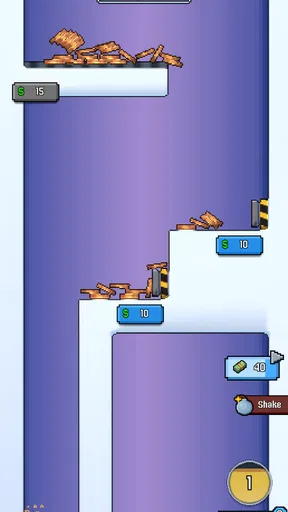


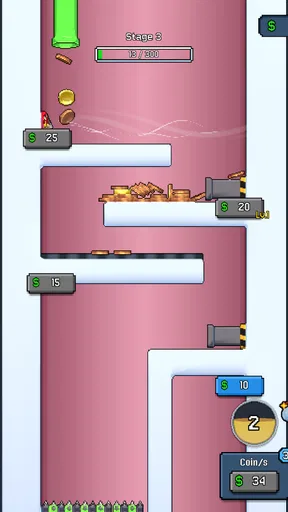

Our Review of Coin Collector
 Analysis by Appyee
I spent time with Coin Collector as a casual simulation game built around a very simple idea: drop coins, operate machines, and turn the result into progress. That straightforward loop is easy to understand, but the real question is whether it remains comfortable and enjoyable for different players, devices, and everyday situations. My impression is that it works best as a light, low-pressure game for short sessions rather than as a deep management simulator.
The game is free to download and is suitable for Everyone, which makes it approachable for families and players who prefer uncomplicated entertainment. It comes from VENTURESIS TEKNOLOJI ANONIM SIRKETI and has reached over a million installs, with a 4.4 average from around eighteen thousand ratings. Those figures suggest that the concept has found a broad audience, although popularity alone does not tell you whether its interaction style will suit your hands, eyes, or attention span.
How Coin Collector feels to use across different situations
I find Coin Collector easiest to judge by the way its coin-and-machine loop fits into different moments, rather than by expecting it to behave like a full management simulator. A short session can be a pleasant pause, while repeated tapping or a desire for deeper choices may change the appeal quickly. Thinking about those situations also makes it easier to decide whether its focused style suits your routine.
Readability and navigation during the main loop
The strongest part of the design is its immediate premise. I never needed a lengthy explanation to understand what I was supposed to do: place or drop coins, watch the machines respond, and use the resulting progress to keep the cycle moving. That clarity matters for players who do not want to learn a complicated interface before they can enjoy a game.
The short description, “Coin Collector,” is accurate but does not explain the rhythm of play. In practice, the experience is less about exploring a large world and more about repeatedly checking the machine area, making a small action, and seeing whether the next improvement is worthwhile. I found that structure easy to return to because the objective stays visible through the activity itself.
Navigation feels most comfortable when I treat the screen as a focused work area rather than a menu-heavy game. The machines draw attention naturally, and the coin action gives the session a clear center. This can help players who find dense interfaces tiring. Instead of remembering several unrelated systems, I could keep my attention on one compact chain of actions.
There is also a trade-off. A simple screen can be welcoming, but it can make small changes in progress feel less meaningful once the basic novelty wears off. Players who need strong visual hierarchy may appreciate the focused layout, while players who rely on very large text or highly separated controls may need to judge the presentation on their own device before committing to longer sessions.
My practical advice is to begin with the phone held at a comfortable distance and check whether the coin targets, machine controls, and progress information are easy to distinguish without squinting. If you are reviewing the game for a child or an older relative, watch how quickly they find the main action without verbal help. That first minute tells you more about fit than the store summary does.
Motor demands and sensory comfort
Coin Collector is a better match for players who enjoy deliberate taps than for people looking for fast reflex challenges. The central interaction is based on placing coins and managing machines, so the experience feels more controlled than an action game that demands constant swipes or rapid reactions. For me, that made it suitable for relaxed play while sitting on a train, waiting for an appointment, or taking a short break.
However, “simple” does not automatically mean accessible to every motor profile. Repeated tapping can still become uncomfortable for someone with hand fatigue, tremors, joint pain, or limited precision. The important question is not only whether the controls are easy to understand, but whether the same action can be repeated comfortably over time. I would use shorter sessions and pause as soon as the interaction starts to feel physically demanding.
The game may also suit players who prefer predictable visual feedback to sudden changes. Its machine-and-coin theme gives the screen a concrete focus, which is easier for me to follow than an interface filled with abstract icons. On the other hand, anyone sensitive to movement, flashing effects, or busy visual feedback should approach cautiously and test a brief session first. I would not assume that a calm economic loop guarantees a calm sensory presentation.
Audio can affect the experience differently from one person to another. Some players enjoy sound as confirmation that an action worked; others play with the volume off because they are in public, sharing a room, or trying to reduce sensory input. Since the game’s core idea is visual and interactive, I found it possible to judge the basic loop without depending on spoken instructions. That is useful in quiet environments, although players who need audio cues for every important state should test whether the visual feedback is enough for them.
A useful personal workflow is to play with one hand only during the first session. That reveals whether the controls are comfortably reachable or whether you must shift your grip repeatedly. If the game is being used on a larger device, try both portrait and landscape holding positions if the device allows a natural change. Comfort is especially important here because the loop invites repetition; a control that feels fine for five actions may feel awkward after many more.
Situational access in ordinary daily play
This is where the game makes the most sense to me. Coin Collector fits small gaps in the day because its premise is understandable immediately and does not require the emotional commitment of a story-driven game. I can imagine opening it while waiting for coffee, playing for a few minutes, and closing it without feeling that I abandoned a complicated mission.
That same simplicity makes it a reasonable choice for someone who wants a gentle introduction to simulation games. A player who has never managed a virtual business or production chain can start with the visible relationship between coins, machines, and profit. There is less pressure than in a competitive strategy title, where missing a timed decision can leave a player feeling behind.
For a family setting, the Everyone age rating is reassuring, but adults should still consider how in-app purchases fit the household’s rules. The game is free, while optional items range from $1.49 to $79.99 each. That is a wide span, so I would make purchase expectations clear before handing the device to a child. The most useful accessibility decision may be a household one: decide whether spending is allowed, restricted, or completely off limits before the game becomes part of a routine.
The game is also a plausible choice for players who dislike competitive pressure. Its appeal comes from building a personal rhythm around the machines rather than comparing reflexes with other people. If you want a social game, a multiplayer challenge, or a simulation with a large narrative layer, this will probably feel too contained. If you want a small activity that can sit beside a podcast, a commute, or a quiet evening, its narrow focus becomes an advantage.
Device age is another practical consideration. The minimum operating system is Android 7.0, which gives the game a relatively broad technical starting point for Android users with older phones. That does not guarantee identical comfort on every screen size or hardware configuration. A smaller display may make controls harder to see, while a slower device could make any repeated interaction feel less pleasant. I would keep expectations realistic: compatibility is not the same thing as an equally comfortable experience on every phone.
Where the design still creates barriers
The biggest limitation is that the game’s accessibility depends heavily on the clarity of its visual presentation and the physical comfort of repeated input. A focused coin-and-machine loop can be easy to learn, but it does not automatically solve problems involving small targets, weak contrast, visual fatigue, or limited dexterity. I would not recommend assuming that a family-friendly rating answers those questions.
Another barrier is repetition. The same quality that makes the game easy to pick up can make it feel narrow for players who need variety, changing objectives, or a strong sense of discovery. Someone with attention difficulties may appreciate the clear immediate task, but may also lose interest if the machine routine does not provide enough variation. Someone who prefers predictable structure may enjoy that same routine for exactly the opposite reason.
The free-to-play structure deserves careful attention as well. The presence of purchases does not make the game unsuitable, but it changes how I would recommend it. For an adult managing personal spending, the choice is straightforward: play for free if the basic loop remains satisfying, and treat purchases as optional rather than necessary. For children, shared devices, or anyone vulnerable to impulsive spending, purchase controls and a clear agreement are part of responsible use.
I also think players who need extensive customization should be cautious. The game’s accessible appeal comes from its simple premise, not from a promise of specialized control schemes or detailed presentation options. If your enjoyment depends on adjustable text, alternative input methods, reduced motion, or robust assistive support, test the opening interaction carefully and stop if the screen or tapping pattern causes strain.
Compared with a traditional idle game, Coin Collector feels more tangible because the coin-drop action gives the player something immediate to do. Compared with a full management simulator, it is much lighter: you are not choosing from a broad economy, balancing many departments, or planning a complex long-term operation. Compared with a puzzle game, it offers less mental variety but a steadier routine. Those differences matter when choosing an alternative. I would pick a deeper simulator for strategic planning, an idle title for mostly passive progress, and this game for a more direct, tactile loop.
Progress, spending, and choosing the right player profile
The best way to approach the game is to decide what kind of satisfaction you want before playing. If you enjoy watching a small process become more productive, the machines provide a clear reason to continue. If you need constant novelty, the coin action may feel like a warm-up rather than a complete game. I found the loop most appealing when I treated each session as a compact routine instead of expecting it to become a full-time hobby.
Players who are sensitive to spending prompts should establish a free-play rule from the start. Because the game costs nothing to begin, it is easy to test without financial commitment. I would play long enough to see whether the basic machine cycle is enjoyable on its own, rather than deciding based on the possibility of buying faster progress. That approach keeps the review honest from a player’s point of view: the core interaction should earn your attention before your money.
For someone with limited time, the game’s greatest strength is its low learning burden. You can understand the central action quickly and return later without reconstructing a complicated plan. For someone with limited hand endurance, the same design may require moderation. Try alternating hands, taking frequent breaks, and avoiding marathon sessions. Those are not substitutes for built-in accessibility tools, but they can make a repetitive game more manageable when the interaction itself is otherwise comfortable.
For players sharing a room or playing in public, the visual nature of the concept is convenient. You can keep the session quiet and still understand the main activity. For players who depend on sound, however, I would not assume that silent play provides all the same information as audio-supported play. The most sensible test is simple: mute the device briefly and see whether you can still identify the important state changes without confusion.
My inclusive verdict after using the game
Coin Collector is a modest, approachable simulation game with a clear identity. I like that the main loop does not bury the player under complicated rules, and I can see why its free entry point and Everyone rating make it appealing to a broad audience. The 1.2.3 version is available for Android devices starting with 7.0, and the game has built a substantial audience rather than feeling like an obscure experiment.
My recommendation comes with conditions. Choose it if you want a tactile coin-and-machine routine, short sessions, and a calmer alternative to competitive or reflex-heavy games. Skip it if you need deep management decisions, rich variety, multiplayer interaction, or extensive accessibility customization. It is also not the right first choice for anyone who finds repeated tapping uncomfortable or who wants to avoid all purchase prompts without setting clear device restrictions.
What I value most is the game’s low barrier to understanding, not a promise that every player will find the physical interaction effortless. The distinction matters. A game can explain itself clearly while still presenting challenges for vision, dexterity, attention, or sensory comfort. I would introduce it gradually, check the screen at the player’s normal distance, keep sessions short, and decide on spending boundaries before regular play begins.
Overall, I see Coin Collector as a friendly, focused time-filler rather than a fully featured business simulator. Its best audience is someone who enjoys seeing a simple process develop through repeated actions and wants something easy to start and stop. For that player, it can be pleasantly satisfying. For everyone else, especially those seeking richer systems or stronger control over presentation and input, a more specialized simulation game will likely be the better fit.
Verdict
Strengths of Coin Collector
- Simple controls make collecting coins easy for players of all ages.
- Short levels are convenient for quick gaming sessions.
- Bright visuals give the game a cheerful and accessible style.
- Coin collecting provides a clear goal and satisfying progress.
- Offline play is useful when you have no internet connection.
Limitations of Coin Collector
- Gameplay can become repetitive after extended play sessions.
- Some levels may feel too easy for experienced players.
- Ads can interrupt the flow between rounds.
- Limited customization reduces long-term personalization options.
- Progression may feel slow without frequent rewards.
Similar Picks in This Category
View All
Truckers of Europe 3
Wanda Software4.3

Town Building Life Simulator
XGame Global4.2

Fidget Toys Trading・Pop It 3D
Freeplay Inc4.7

Sculpt People
CrazyLabs LTD4.4

Scary Teacher 3D
Z & K Games4.2

Hair Tattoo: Barber Shop Game
CASUAL AZUR GAMES4.3
Frequently Asked Questions
What is Coin Collector and how does the game work?
Coin Collector is a casual collection game focused on finding, gathering, and organizing different types of coins. After installing it, players typically progress by collecting available coins, completing objectives, and improving their collection over time. The experience is designed to be easy to understand, making it suitable for short play sessions as well as longer periods of relaxed gameplay.
Is Coin Collector free to download and play?
Coin Collector can generally be downloaded and played without an upfront purchase, although the exact availability may depend on whether you use Android or iOS. Like many free mobile games, it may include optional advertisements, in-app purchases, or premium items. Before downloading, users should review the store listing and payment settings, especially if children may access the device.
Does Coin Collector require an internet connection?
The need for an internet connection may vary depending on the version and the features being used. Basic collecting or offline gameplay may work without constant connectivity, while advertisements, cloud saving, events, rankings, or other online services can require internet access. If you plan to play while traveling, test the main features offline before relying on the game without mobile data.
Is Coin Collector suitable for children and beginners?
Coin Collector is generally approachable for beginners because its core concept is simple and does not usually require advanced gaming skills. However, parents should check the age rating, advertising content, and available in-app purchases before allowing children to play. Some versions may also include links to external pages or social features, so parental controls are recommended for younger users.
What should I check before downloading Coin Collector?
Before downloading Coin Collector, check that your device meets the required operating-system version and has enough free storage. It is also worth reviewing recent user ratings, the privacy policy, permissions, and whether progress is saved locally or through an account. If you dislike advertisements or optional purchases, confirm how monetization works so the game matches your expectations.
Play our best games!


